Social Media Samples
I’m a social media and digital strategist with a longtime background in storytelling, journalism, and public service communications. At Seattle Channel, I lead social media strategy, production, marketing, and audience growth, using analytics to shape content that connects with viewers locally and around the world. Since 2017, that approach has helped grow the Channel’s social audience from 21,400 to 155,000, increase video views from 450,000 to 7 million, and boost engagement by 225%.
My work combines strong editorial judgment with data-driven strategy to create content that is clear, thoughtful, and impactful. Here are some examples of the work I’m most proud of, including projects from my time at the Japanese Cultural & Community Center of Washington.
Running with the Paint
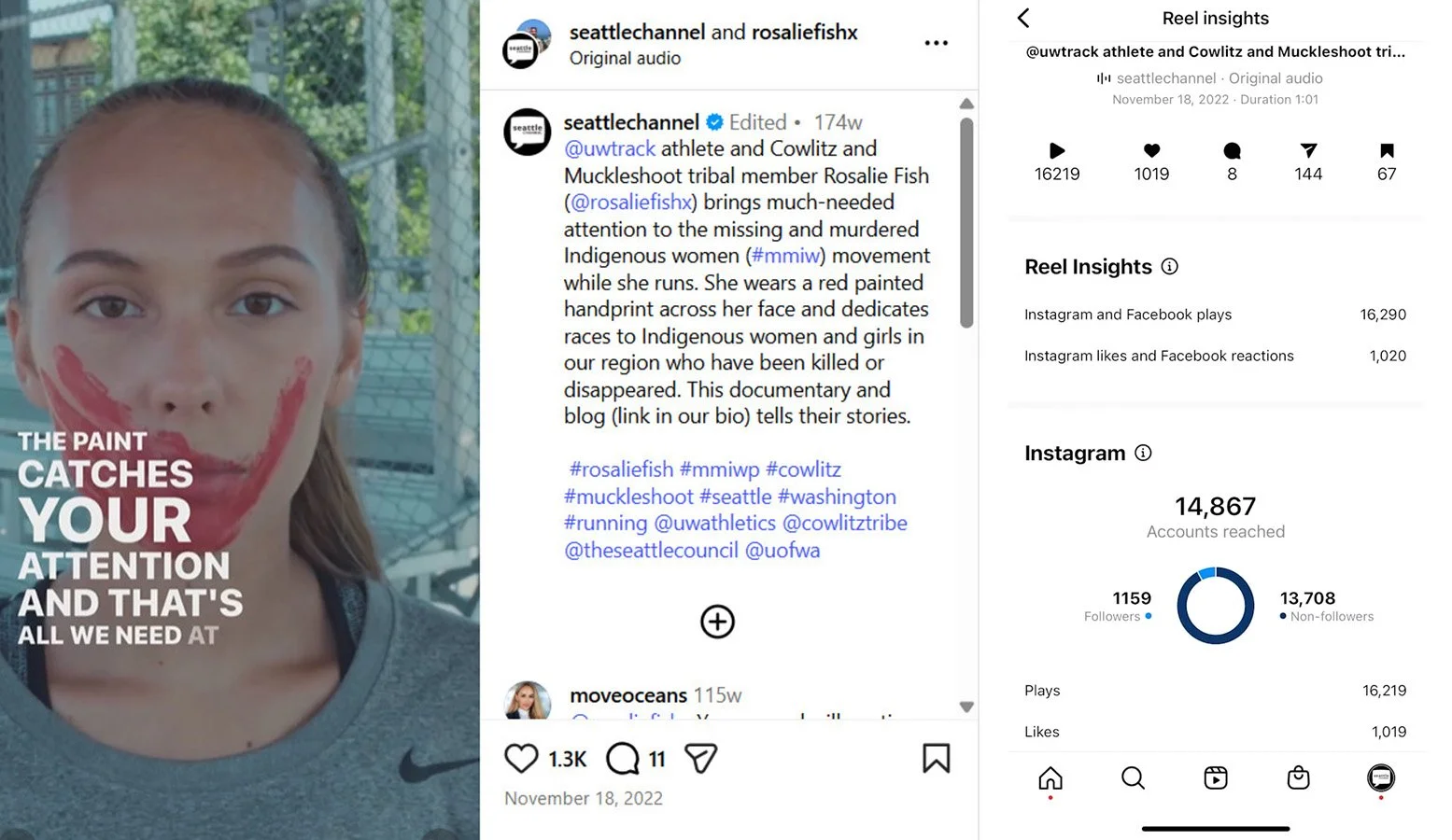
To help promote Seattle Channel’s documentary Running with the Paint, I focused on creating a social media strategy that would stop people mid-scroll and make them want to learn more. The film followed Rosalie Fish, a University of Washington runner and advocate who brought attention to Missing and Murdered Indigenous Women, including sharing the story of her own aunt. That personal connection gave the post real emotional power, and it helped the message land in a way that felt human, not just informational.
I helped support the campaign with working with the editor to create a short vertical video that worked as a trailer for the full documentary, along with a companion blog post written by our intern Addy Pratt that gave more background on the victims mentioned in the film. I think that combination is a big part of why the project worked. The video drew people in quickly, and the blog gave them somewhere to go if they wanted to spend more time with the story.
The post performed especially well on Instagram, where it earned more than 16,000 views, and across platforms it brought in more than 1,300 likes, 150 shares, and clickthroughs to the full documentary. Beyond the numbers, what meant the most was seeing the piece continue to have a life after launch. The Tulalip Tribe used the video as an educational resource and aired it on its local channel.
The work was also recognized with a 2023 Golden Post Award from GSMCON, which was especially meaningful because it showed the piece connected not just with audiences, but with fellow communicators as well.
What made this project successful was pretty simple. It had a strong human story, powerful visuals, and a clear purpose. It wasn’t just promoting a documentary. It was helping raise awareness around an issue that deserved more attention, while giving audiences a meaningful way to engage more deeply.
Remembering Nihonmachi: The Honda Family
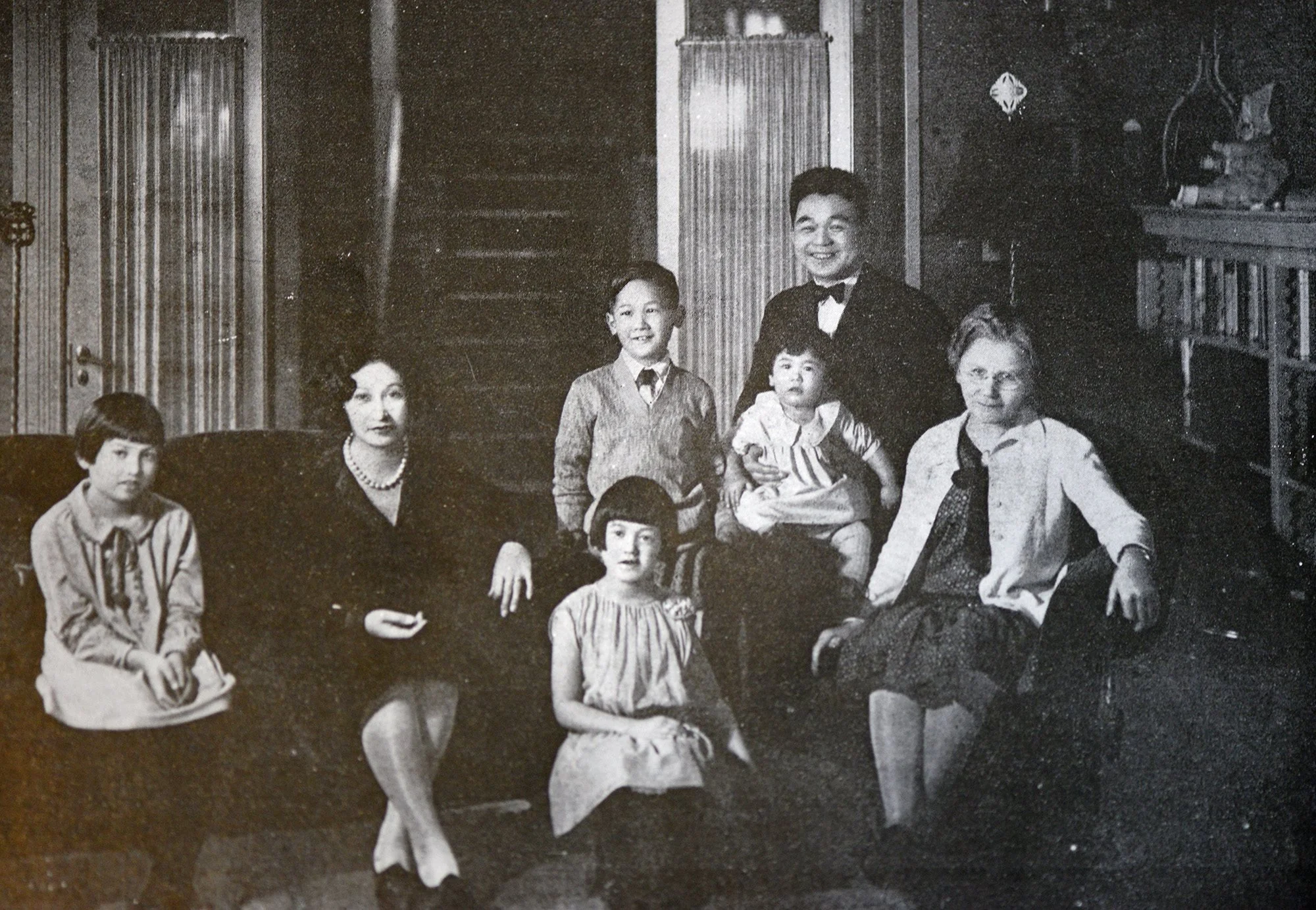
At the Japanese Cultural and Community Center of Washington, I got to bring together two things I care deeply about: community and history. I created a series called Remembering Nihonmachi that focused on untold and lesser-known stories from Seattle’s Japantown and Japanese American community. One story that especially stayed with me was about the Honda family, a family living in Seattle in the 1930s whose life was torn apart by World War II.
I first came across an old family photo and was immediately drawn in. The more I researched, the more heartbreaking and revealing the story became. After Pearl Harbor, Seita Honda was arrested by the FBI and sent to a detention camp in Montana. Two of his children were sent to Minidoka in Idaho, while the youngest children were placed in Seattle orphanages. His wife, Erminie, who was born in the Alaska Territory, lost her U.S. citizenship because she had married a Japanese man. The family’s home near 16th and Spring was never returned to them after the war.
What made this project especially meaningful was being able to connect history to living memory. I tracked down Honda family members, including granddaughter Dawn, who shared more personal details that helped bring the story to life beyond the archival record. That made the piece feel less like a history post and more like helping preserve a family’s story with the care it deserved.
This project reminded me why community storytelling matters. Sometimes the most powerful histories are the ones that feel small and personal at first, like a single photograph, but end up revealing the far-reaching impact of injustice across generations.
The unbelievable story behind bar Shelly’s Leg
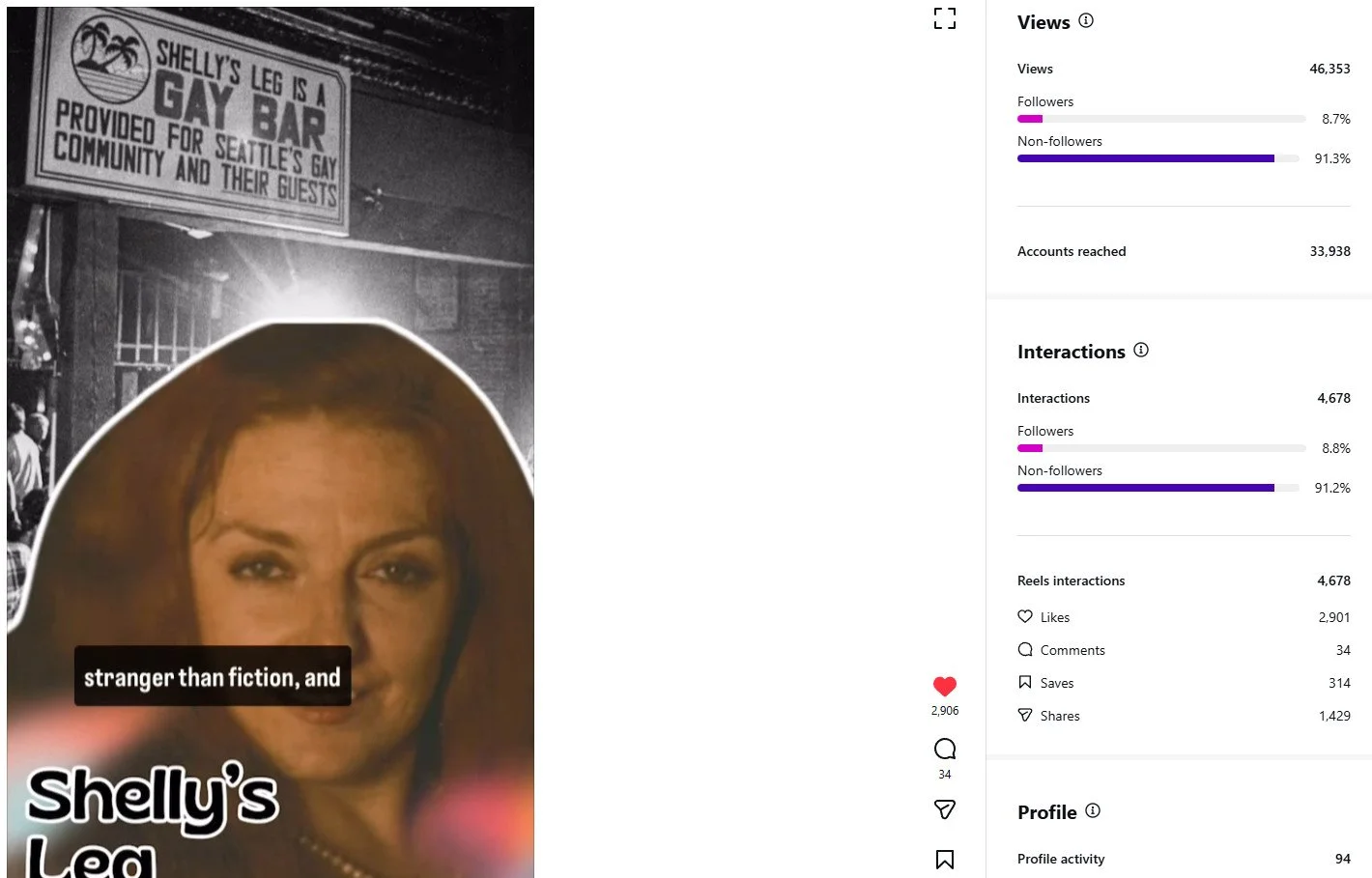
Planning is a big part of social media production. Some moments can’t be anticipated, but others are easier to build around, including heritage and history months like Pride. For this project, I highlighted the unbelievable true story of Shelly’s Leg, a short-lived but historic gay bar in Seattle’s original gayborhood, Pioneer Square.
The story was compelling on its own, and I was glad to help bring it to audiences in collaboration with MOHAI. Published during Pride Month, the video earned more than 45,000+ views on Instagram and another 10,000 on TikTok.
The most powerful stories are the ones that come from a real place and have the power to change someone’s life. This is the story I’ve shared that means more to me than any metric ever could.
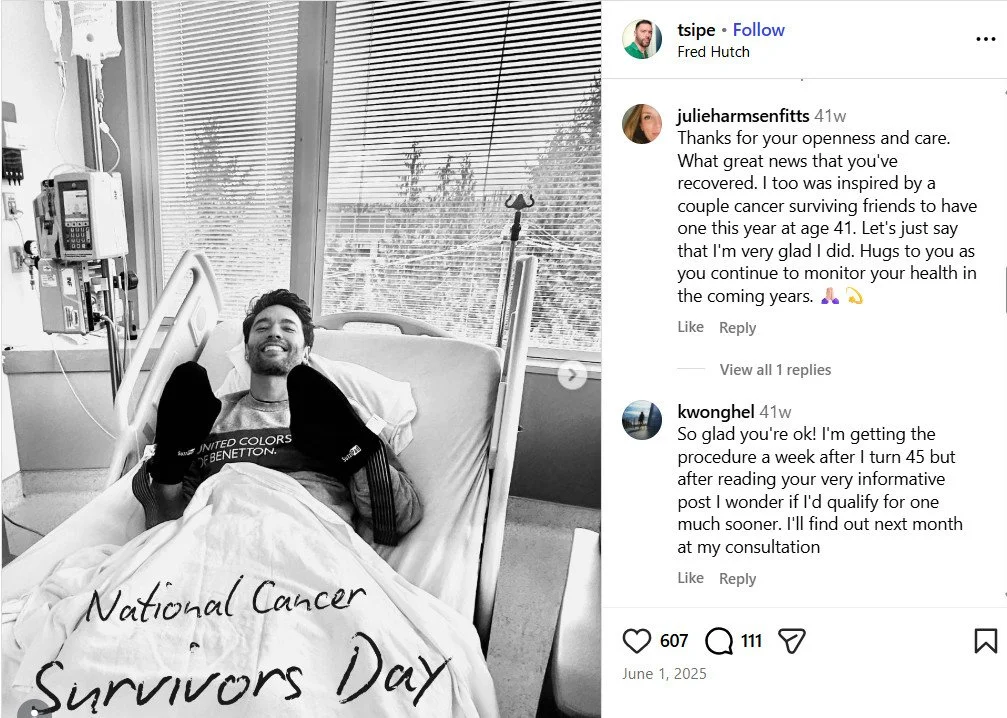
In this post, I opened up about my stage 3 colorectal cancer diagnosis as part of my advocacy for colorectal cancer awareness, prevention, and early screening. A few weeks before sharing it, I had received the news every cancer patient hopes for: no evidence of disease. It felt important to use that moment not just to update people on my health, but to encourage others to take symptoms, family history, and screening seriously.
The response was deeply meaningful. Dozens of friends and family members told me they scheduled colonoscopies after reading my story. Others shared the painful news that they, too, had been diagnosed with colorectal cancer. For me, it was a powerful reminder that social media can do more than inform. It can move people to act, create connection, and help others feel less alone.
Seattle’s vanished Japantown
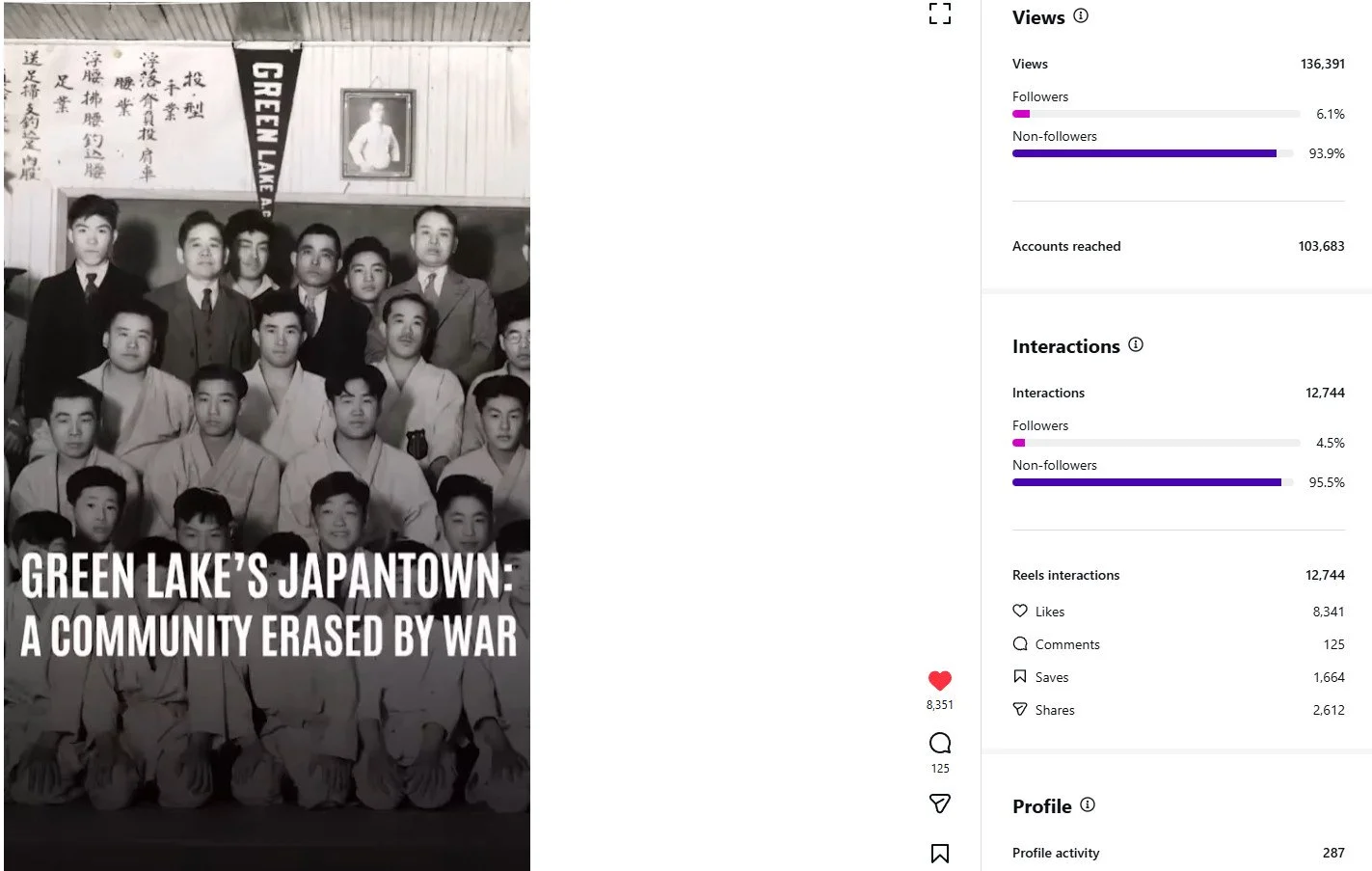
Continuing on my longtime interest in history and community storytelling, I created a social media video about Seattle’s forgotten Japantown in the Green Lake neighborhood — a place many residents likely never knew existed. I reshared the piece in 2025, when its themes of displacement, racism, and federal policy felt especially urgent and timely.
Produced in collaboration with the Japanese Cultural and Community Center of Washington and Densho, the video brought overlooked local history to a wide audience. It became one of my most successful Instagram posts to date, earning more than 130,000+ views and generating more than 100 comments as viewers reflected on the loss of this close-knit community and why its story still matters.